

If you have received a traffic ticket in South Africa, the official AARTO online system can help you check your infringement, review available options, make a payment, or take further action where applicable. The system is administered by the Road Traffic Infringement Authority (RTIA) under the Administrative Adjudication of Road Traffic Offences framework. RTIA currently identifies online.aarto.gov.za as the only official AARTO website and warns motorists about fraudulent websites and payment links. (RTIA)
What Is AARTO?
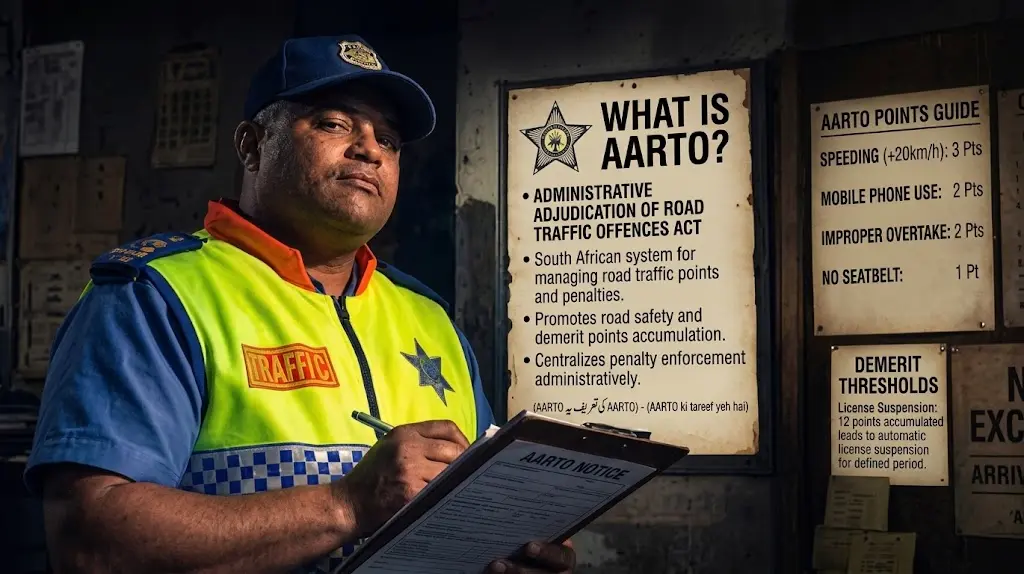
AARTO is the Administrative Adjudication of Road Traffic Offences framework used to administer qualifying road-traffic infringements through an administrative process. For motorists, the system provides several ways to deal with a traffic matter, including checking a notice, paying a penalty, nominating the person who was driving, submitting a representation, arranging an eligible instalment payment, or following the applicable further process. RTIA’s official this process page lists these options for motorists who receive an infringement notice, courtesy letter, enforcement order, or warrant of execution. (RTIA)The important thing to remember is that receiving an infringement does not necessarily mean that paying immediately is your only available action. Depending on the circumstances and the stage of the matter, you may have different options. You should therefore read the notice carefully, check the applicable deadline, and use the official AARTO platform rather than relying on an unfamiliar website or payment link.for more information visit my home page click here.
Official AARTO Website
The official online portal is https://online.aarto.gov.za/. RTIA’s latest public warning states that this is the only official AARTO website and specifically advises motorists not to make payments or provide personal information on other websites claiming to be an AARTO platform. Fraudsters have reportedly used cloned websites, SMS messages, WhatsApp messages and emails to obtain motorists’ money or personal information. (RTIA)
Official AARTO Portal: online.aarto.gov.za
For additional information about the system, motorists can also visit the official RTIA website. The RTIA website provides information about the AARTO process, available services, frequently asked questions, legislation and official announcements. (RTIA)
How to Register on AARTO Online
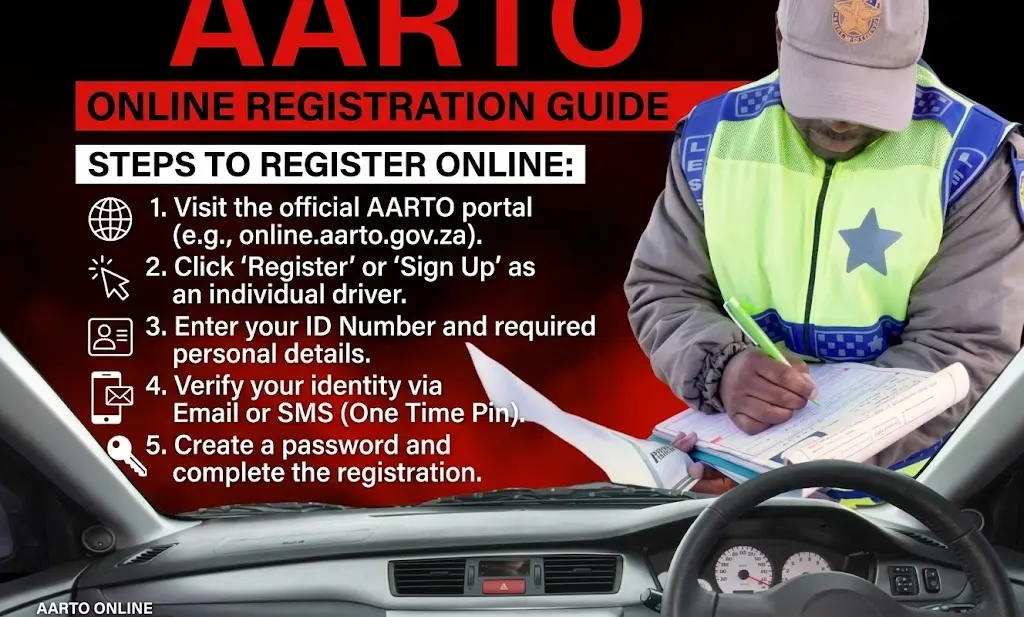
The RTIA’s AARTO user guide provides the following registration process.
Step 1: Open the Official Website
Open your browser and go to:Check the domain carefully before entering any personal information.
Step 2: Select “Register”
On the AARTO homepage, select REGISTER in the upper-right area of the website.
Step 3: Select Your Registration Type
The AARTO system provides different registration capacities. Individual motorists registering to manage their own infringements should select the individual-driver option.A person acting as a proxy for a company can select the company-proxy option where applicable.
Step 4: Enter the Required Information
Follow the information requested by the website and provide accurate details.Make sure your information corresponds with the records associated with your AARTO/NaTIS profile where applicable.
Step 5: Complete Registration
Follow the remaining on-screen instructions to complete your profile. Once registration is complete, use your login credentials to access the services available to your account.
AARTO Login: How to Access Your Online Profile
To complete an AARTO login, open the official portal and use the login option provided on the website. Enter the credentials associated with your registered profile and follow any additional verification instructions displayed by the portal. Once signed in, the services available to you will depend on your profile and the information recorded against it. If you are accessing the website from a shared computer, avoid saving your password in the browser and always log out when you finish. Most importantly, check the domain before entering your username, password, ID number or payment information because RTIA has warned that fraudulent websites can closely imitate legitimate online services. (RTIA)
Use the official portal: AARTO Online Login
How to Check AARTO Fines Online
If you want to check AARTO fines, RTIA provides a Query My Fine service. The official AARTO process page explains that motorists can use this service to enquire whether they have outstanding traffic fines or whether a traffic fine has already been paid. (RTIA)To check your record, open the official AARTO website and access the relevant fine-query service. Have your identification information or infringement notice number available because RTIA advises motorists to have an ID number or relevant infringement notice number ready when making an enquiry. Enter the requested information carefully and submit the query. Review the results displayed by the system and check the status of each listed matter. If a payment is already recorded, keep the payment confirmation for your records. If an infringement remains outstanding, read the available options and deadline before deciding what action to take. (RTIA)
Official AARTO services: RTIA AARTO Process
Understanding an AARTO Infringement Notice
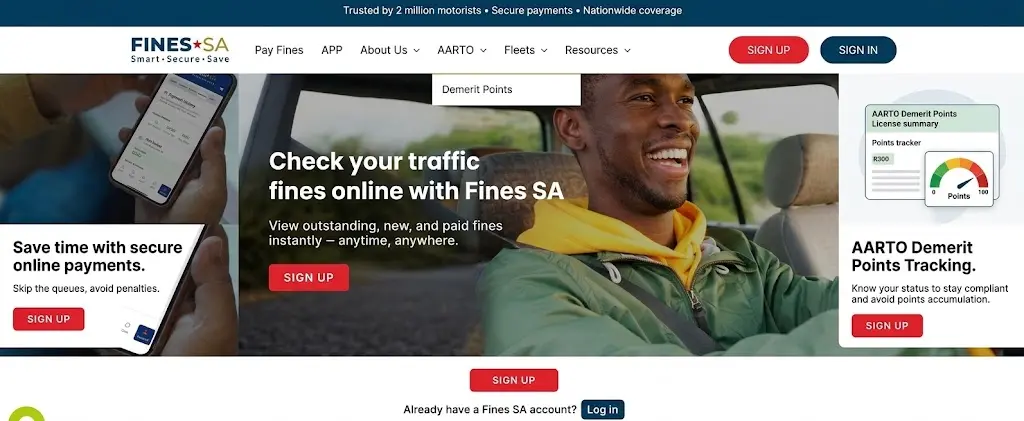
An AARTO infringement notice is the formal notice relating to an alleged road-traffic infringement. When you receive one, check the information carefully rather than immediately assuming that the only option is payment. Look at the infringement notice number, date, vehicle information, alleged infringement, penalty information and deadline. The notice is important because its number is also used as a reference when dealing with the matter.RTIA’s published AARTO information explains that motorists can have different options after receiving an infringement notice. These include paying the applicable amount, nominating the actual driver where someone else was driving or in control of the vehicle, submitting a representation where there are reasonable grounds, or applying for an eligible instalment arrangement. (RTIA)
What Should You Do After Receiving an AARTO Infringement?
After receiving an AARTO infringement, first verify that the notice is genuine and that the information belongs to you or your vehicle. Do not use a payment link from an unexpected SMS, WhatsApp message or email. Instead, type online.aarto.gov.za into your browser yourself and use the official platform. RTIA’s current fraud warning specifically tells motorists not to click links in suspicious AARTO messages and not to provide ID, licence or banking details to unofficial websites. (RTIA)Next, check the deadline shown on the notice. Under the published AARTO process, payment within 32 days can qualify for a 50% discount on the applicable penalty. The official process also identifies alternatives such as driver nomination, representation and instalment arrangements. (RTIA)If you were the driver and decide to pay, use an approved payment channel and retain your proof of payment. If someone else was driving the vehicle, review the driver-nomination procedure instead. If you believe there are reasonable grounds for disputing the infringement, review the representation requirements before submitting anything. Taking action within the applicable period is important because an unresolved matter can progress to later stages of the AARTO process.
AARTO Payment Deadline and 50% Discount
One of the key dates to understand is the 32-day period. RTIA states on its official AARTO process page that motorists can pay within 32 days and receive a 50% discount on the applicable penalty. (RTIA)The published AARTO notice information also explains that if the required action is not taken within the applicable 32-day period, the discounted amount is no longer applicable and the matter can proceed to a courtesy-letter stage. (RTIA)For this reason, do not wait until the deadline is almost over. Check your notice as soon as possible, confirm the information, and decide which available option applies to your circumstances.
AARTO Fines, Demerit Points, Driver Nomination & Representations
How to Pay AARTO Fines Online?
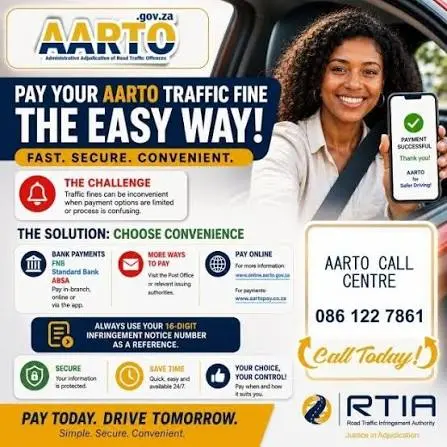
Once you have checked your infringement and decided to pay, use the official online portal rather than a payment link received through an SMS, WhatsApp message or email. Open online.aarto.gov.za and access the relevant infringement information. Review the infringement number, penalty amount, applicable deadline and payment details before continuing. Select the available payment option shown by the official system and complete the transaction through the approved payment process. After payment, save the receipt or confirmation number because it provides evidence that the transaction was completed. If the payment does not immediately appear against the infringement, retain your proof of payment and contact RTIA through its official channels for assistance. RTIA has specifically warned motorists about fraudulent AARTO payment websites and messages, so checking the web address before entering banking information is an important part of the payment process.
Official payment portal: AARTO Online Portal
What Happens If You Do Not Pay Within 32 Days?
The 32-day period is important when dealing with an infringement notice. According to RTIA’s published information, a motorist who pays within 32 days can receive the applicable 50% discount. If the required action is not taken during this period, the matter can move to the next stage of the administrative process. A Courtesy Letter may then be issued, and the discount is removed while the applicable courtesy-letter fee is added. RTIA’s FAQ identifies a R100 courtesy-letter fee in this situation. If the matter continues to remain unresolved after the applicable period, it can progress to an Enforcement Order.For this reason, motorists should not ignore an infringement simply because they disagree with it or cannot make an immediate payment. Instead, check which options are available on the notice and take the appropriate action before the relevant deadline. Depending on the circumstances, that action could include payment, driver nomination, representation or another procedure provided under the AARTO framework.
Understanding an AARTO Courtesy Letter
A Courtesy Letter is a later communication in the infringement process when the required action was not taken during the initial period. It is important because the financial position of the matter can change after the original discount period expires. The RTIA explains that when the Courtesy Letter stage is reached, the 50% discount is removed and a prescribed fee is added.If you receive a Courtesy Letter, read it carefully and check the infringement reference, outstanding amount and available options. Do not assume that the original discounted amount can still be paid. Use the official AARTO portal to verify the current status and, if necessary, contact RTIA for clarification. Keeping copies of the original infringement notice and the Courtesy Letter can also make it easier to track the history of the matter.
What Is an AARTO Enforcement Order?
An Enforcement Order is a later stage that can arise when an infringement remains unresolved after the applicable administrative steps. RTIA explains that an Enforcement Order can result in consequences such as electronic blocking of certain NaTIS transactions and the allocation of demerit points.If you receive an Enforcement Order, check the official record rather than relying on information supplied by a third party. Review the outstanding amount, applicable administrative fees and the options available for resolving the matter. An Enforcement Order should not be treated as an ordinary reminder because it represents a more advanced stage of the process. Where you believe the order was issued incorrectly or there are grounds for a revocation application, check the current RTIA requirements before submitting an application.
AARTO Demerit Points Explained
The demerit system is an important part of the administrative framework. Points are allocated according to the seriousness of qualifying infringements, meaning that different traffic violations can have different consequences. RTIA’s FAQ states that the demerit threshold is 15 points, and exceeding the threshold can result in suspension. The length of the suspension depends on the number of points accumulated above the threshold.RTIA also explains that drivers and operators can accumulate points separately, while qualifying infringements can carry different numbers of points. Published RTIA information states that infringements can carry up to five demerit points and certain qualifying offences dealt with in court can carry up to six points. Therefore, motorists should pay attention not only to the financial penalty but also to the points associated with an infringement.
How Does the AARTO Demerit System Work?
The demerit system is designed to keep a record of qualifying infringements and encourage compliance with road-traffic laws. When a qualifying infringement is finalised in the applicable manner, the associated points can be recorded against the relevant driver or operator. The total can change when further qualifying matters are recorded or when points are reduced under the applicable rules. RTIA states that one point can be reduced after each three-month period in which no further qualifying infringement occurs.This means motorists should regularly monitor their records instead of only checking when they receive a new ticket. Keeping track of outstanding matters, finalised infringements and demerit points can help you understand your current position and avoid unexpected consequences.
Can AARTO Demerit Points Be Reduced?
Yes. RTIA provides for point reductions under specified circumstances. Its official FAQ explains that one point can be reduced for each three-month period without another qualifying infringement. An approved rehabilitation programme can also provide an additional reduction where the applicable requirements are met. RTIA states that completion of an approved rehabilitation programme can result in four points being deducted in the circumstances specified by the system.The reduction process should not be confused with cancelling an infringement. A reduction in points does not automatically remove a financial penalty or erase the underlying infringement. If you are checking your record, consider the infringement status and demerit-point position separately.
How to Nominate the Actual Driver
Driver nomination is useful when an infringement is associated with a vehicle but the person who received the notice was not the person driving or in control of the vehicle at the relevant time. The official AARTO process provides a Nominate Driver option for applicable circumstances.To begin, access the official AARTO portal and locate the relevant infringement. Select the driver-nomination option and provide the information requested about the actual driver. Check all details carefully before submitting the nomination because the information should be accurate and relate to the specific infringement. Once the nomination has been submitted, keep the confirmation or reference information for your records.The driver-nomination process should not be used simply to avoid responsibility or transfer an infringement without a legitimate basis. Provide truthful information and follow the requirements displayed by the official portal. If you are unsure about the eligibility or documentation required, consult the RTIA’s official instructions before submitting the nomination.
What Is an AARTO Representation?
A representation is an administrative process through which a person can ask for an infringement to be considered for cancellation when there are reasonable grounds for doing so. RTIA explains that written representations are considered by a Representations Officer.If you believe your infringement should be cancelled, first review the notice and identify the specific reason for your request. Gather relevant supporting documents before starting the application. The information should clearly explain the circumstances and provide evidence where appropriate. RTIA’s published information identifies AARTO 08 as the prescribed form for written representations and warns that incomplete information can result in rejection.
How to Submit an AARTO Representation
Start by reviewing the infringement notice and confirming that a representation is the appropriate option for your circumstances. Prepare your explanation and collect documents that support your reasons. Complete the required representation information accurately, including the relevant infringement details and your contact information. Submit the representation through the applicable official channel and retain proof that it was submitted. Once the application has been processed, review the decision carefully. If the representation is unsuccessful, additional administrative options may be available depending on the matter and the applicable rules.
Official RTIA information: RTIA AARTO Process
What Happens After a Representation?
After a representation is submitted, it is considered through the applicable administrative process. If the representation is accepted, the infringement can be cancelled in accordance with the decision. If it is rejected, the person concerned may have access to a further review or appeal process where the relevant requirements are met. RTIA’s FAQ explains that the AARTO framework provides for an Appeals Tribunal for applicable matters following an unsuccessful representation.Do not assume that submitting a representation automatically stops every deadline or prevents the matter from progressing. Always follow the instructions provided with the relevant decision and check the current RTIA requirements for the next stage.
AARTO Appeals and Reviews
Where a representation has been unsuccessful, the applicable AARTO framework provides a further process through the Appeals Tribunal for qualifying matters. RTIA’s FAQ states that an appeal or review application must generally be made within 30 days of the relevant decision, subject to the applicable rules and circumstances.Because deadlines and procedural requirements are important, check the decision you received and the current official RTIA instructions before submitting an appeal. Make sure you use the prescribed application method and provide the information and supporting documentation requested. Keep copies of everything you submit, including confirmation of delivery or submission.
AARTO Instalment Payments
Motorists who cannot settle an eligible penalty in one payment may be able to apply for an instalment arrangement. RTIA’s FAQ states that an application must be approved before instalment payments begin. Its published information describes arrangements of up to six months for penalties up to R750 and up to 12 months for penalties above R750, subject to the applicable requirements.If you want to use an instalment arrangement, check the current requirements before making assumptions about eligibility. Submit the required application through the appropriate official channel and wait for approval where required. Do not simply divide the amount yourself and assume that informal partial payments will automatically create an approved arrangement.
Clearing an Enforcement Order
Once an Enforcement Order has been issued, the matter needs to be dealt with according to the applicable AARTO process. RTIA states that an Enforcement Order can be cleared following the required full payment, including applicable administrative fees, or following a successful application for revocation where the relevant requirements are met.If you make an online payment, keep the transaction confirmation until the status has been updated. RTIA notes that online payments are intended to clear in real time, although technical problems can sometimes require manual allocation after proof of payment has been supplied. Checking the official record after payment is therefore a useful final step.
AARTO Online Services
The official AARTO online platform brings several services together so motorists can manage qualifying traffic infringements without relying entirely on physical enquiries. Depending on the status of your record, you may be able to check an infringement, review payment information, nominate a driver, submit a representation, manage an eligible instalment arrangement, or review information relating to enforcement. The exact options displayed can depend on the type and stage of the matter. For this reason, always read the instructions attached to your specific notice and use the official portal when taking action. The RTIA website also provides information about the administrative process, forms, frequently asked questions and other official resources. (rtia.co.za)
Official online portal: AARTO Online Services
How to Keep Your AARTO Information Safe
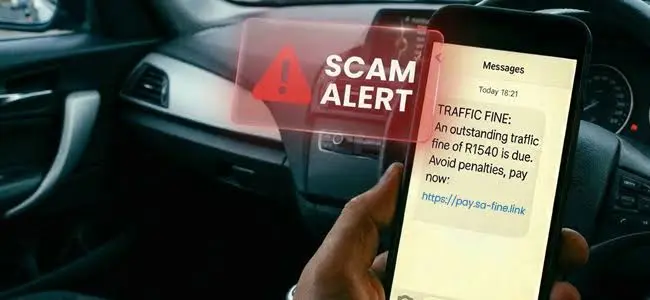
When dealing with traffic infringements online, protecting your personal and financial information is important. RTIA has warned the public about fraudulent websites, SMS messages, WhatsApp messages and emails that imitate official AARTO communications. Some fraudulent messages may create urgency by claiming that a driver’s licence or vehicle licence will immediately be blocked unless a payment is made through an attached link. Instead of following such links, open your browser and manually enter the official AARTO address. (rtia.co.za)Before making a payment, check that the website address is online.aarto.gov.za. Do not enter your ID number, banking information, password or card details into a website with a different domain simply because its design looks similar to the official portal. If you receive a suspicious message, verify the information through RTIA’s official website or contact centre before taking action.
Common AARTO Scams to Watch For
Fake traffic-fine messages can use several different approaches. A message may claim that you have an unpaid fine and provide a link for immediate payment. Another may offer a supposedly limited-time discount or threaten that your vehicle or licence will be blocked unless you pay immediately. Fraudulent websites can also copy official logos, colours and wording to make them appear genuine.The safest approach is to avoid opening payment links in unexpected messages. Instead, access the official portal directly and check whether the alleged infringement appears in your record. RTIA’s official warning specifically advises motorists to be cautious of fraudulent AARTO websites and payment requests. (rtia.co.za)
AARTO and NaTIS Transactions
An unresolved matter can eventually have consequences for certain NaTIS-related transactions when it reaches the enforcement stage. RTIA explains that an Enforcement Order can result in electronic blocking of certain transactions and can also lead to the allocation of demerit points. (rtia.co.za)This is one reason motorists should deal with notices within the applicable timeframes. If you have an outstanding matter, check its current status through the official online system rather than waiting until you need to renew or perform another vehicle-related transaction. If the record shows an Enforcement Order, review the official requirements for clearing it.
AARTO Record-Keeping Tips
Keeping good records can make the process easier if you need to prove that you paid a penalty, submitted a representation or nominated another driver. Save the original infringement notice, copies of correspondence, submitted forms, supporting documents, payment receipts and online confirmation numbers. If you communicate with RTIA, keep the reference number and date of the enquiry as well.It is also useful to maintain a simple record of the status of each matter. For example, you can record the infringement number, date of notice, amount, deadline, action taken and current status. This can help prevent different notices from being confused with one another.
AARTO Contact Information
For questions about the administrative process, motorists can contact the Road Traffic Infringement Authority through its official channels. RTIA lists the National Call Centre number as 0861 227 861 and advises motorists to have their ID number or relevant infringement notice number available when making enquiries. (rtia.co.za)
For online services, use the official portal:
For general information, notices, forms and other official resources, visit:
FAQ’s
Conclusion
Using the official AARTO online system gives South African motorists a central way to manage qualifying traffic infringements and understand the different stages of the administrative process. From checking an infringement and reviewing payment options to nominating a driver, submitting a representation or dealing with an Enforcement Order, the correct procedure depends on the status of the specific matter. The most important steps are to read your notice carefully, act within the applicable deadline, keep complete records and use only official RTIA and AARTO channels. For the latest information, always verify the details through the official websites because procedures, online services and implementation arrangements can change.for more information visit my home page click here.
READ MORE